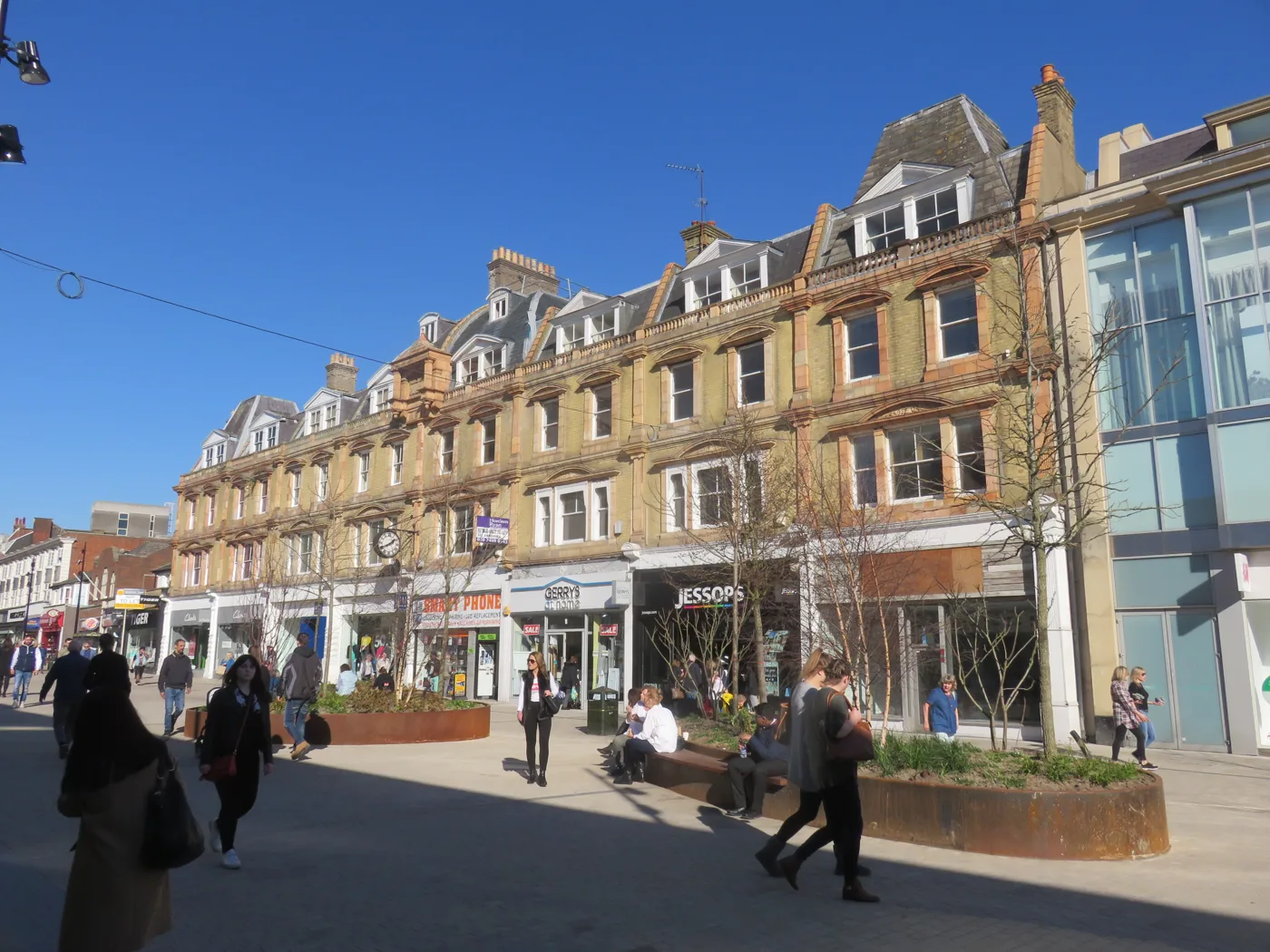

The administrators' August 2026 report: £8.5m held at 20 July, employee and HMRC preferential claims to be paid in full at 100p, unsecured dividend still not quantified.
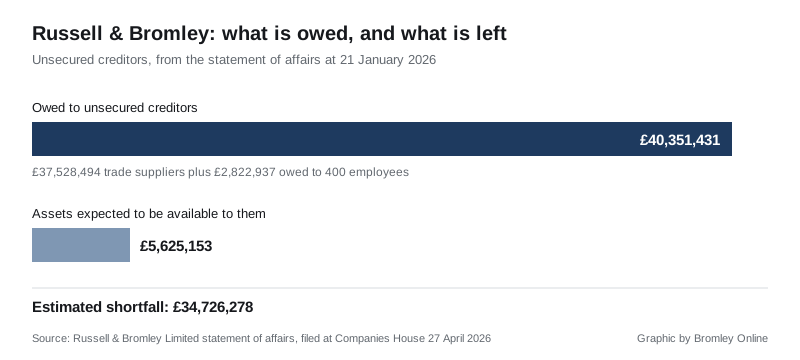
Russell & Bromley Limited has left an estimated £34.7m that its creditors will never see. The figure comes from the company’s own statement of affairs, sworn in March and filed at Companies House on 27 April 2026.
The shoe retailer collapsed into administration on 21 January 2026. It traded from 41 sites and employed 440 people. The name has been a fixture of British high streets for generations, and it has a Bromley connection most shoppers never knew about: until November 2024 the company was registered in the town.
What the statement of affairs records
A statement of affairs is the sworn account of what a company owns and owes on the day it fails. This one was signed on 27 March 2026 by director Andrew Bromley and covers the position at 21 January.
It records:
- £37,528,494 owed to unsecured trade creditors
- £2,822,937 owed to 400 unsecured employee creditors
- £5,625,153 of assets expected to be available to those unsecured creditors
- £34,726,278 estimated shortfall to unsecured creditors
- £35,746,278 estimated total deficiency once the £1,020,000 of issued share capital is counted
Two smaller groups sit ahead of them in the queue and are expected to be paid. The document lists 277 ordinary preferential employee creditors owed £121,482, and HMRC as a secondary preferential creditor owed £2,506,450.
The assets side is where the scale of the write-down shows. The company’s books valued its floating charge assets at £38,166,993. The statement estimates they will actually realise £8,253,085. Stock carried at £10,978,184 is expected to fetch £6,743,887. Office equipment, fixtures and fittings on the books at £6,765,560 are expected to realise £100,000. Intangibles worth £5,595,946 on the books are written to nothing, with the brand and intellectual property valued instead at £1. Landlord deposits of £939,777 are expected to return zero.
The August 2026 progress report: what creditors are actually owed, and what is in the pot
The first full account of the money arrived on 28 August 2026, when joint administrators Will Wright and Chris Pole of Interpath filed their progress report covering 21 January to 20 July 2026. It is the document that moves this story on from estimates to cash, and it answers a question the statement of affairs could not: how much money the administration is actually holding.
£8,501,831 was in the administration’s hands at 20 July 2026. Set against that, the claims in the queue are:
| Creditor class | Amount | What the administrators say |
|---|---|---|
| NatWest, secured | £2.1m at appointment | Offset against a company bank account straight after the appointment. Nothing now outstanding. Independent solicitors HCR Legal reviewed the security and confirmed it valid |
| Ordinary preferential, employees | About £134,000 | Expected to be paid 100p in the pound, as soon as reasonably practicable |
| Secondary preferential, HMRC | About £2.8m | Expected to be paid 100p in the pound. It is pre-administration group VAT plus unpaid PAYE and NIC, and the company is jointly liable with Farwig Limited and Russell & Bromley Online Ltd |
| Unsecured, trade | £37,528,494 | “May receive a dividend.” The quantum is still not determined |
| Unsecured, employees | £2,822,937 | Same queue as the suppliers |
So the honest answer to what unsecured creditors will get is still not a number. The administrators repeat, seven months in, that unsecured creditors “may receive a dividend” and that they will set the figure once asset realisations and the associated costs are finished. What has changed is that the two preferential classes ahead of them are now expected to be paid in full rather than merely hoped to be.
The trading period made money, and the stock did not
The shops kept selling after the administrators arrived, and it worked. Post-appointment sales came to £13,122,375, made up of £12.57m of retail sales, £539,016 through concessions and £15,438 of subtenant rent. After direct labour, concession commission and trading expenses, that left a trading surplus of £4,949,686, and the administrators expect the final trading profit to settle at about £4.1m once everything is reconciled. Retail Realisation LLP was appointed as trading agent, underwrote the stock to an agreed level and ran the discounting.
The stock itself is the line that went the other way. The statement of affairs expected stock to realise £6,743,887. The receipts account shows £1,988,824 actually banked against that heading, because most of the value came through the till as trading sales rather than as a stock sale. The leasehold property interest beat its estimate the other way, realising £526,169 against £100,000 expected, and cash at bank came in almost exactly on the £1,011,229 forecast at £998,976.
The costs sitting ahead of the unsecured queue
The reason £8.5m in the account does not translate into a meaningful dividend on £40.4m of unsecured debt is the expenses. The report puts the administrators’ time costs to 20 July at £4,341,945, being 5,148 hours at an average of £843 an hour. None of it has been drawn yet: no remuneration was taken during the period, and £32,227 of expenses were incurred and not paid. The administrators are now asking creditors, by correspondence, to approve drawing that remuneration on a time-cost basis under a revised fee estimate.
On top of that sit £596,875 of unpaid pre-administration costs, none of which has been paid: £226,875 to Interpath, £364,000 to solicitors Hogan Lovells and £6,000 to Datasite UK for the virtual data room. Approval to pay those as an expense of the administration is part of the same decision.
The stated reason for the fee increase is that the trading period ran longer than planned in order to sell more stock, which brought more work in trading oversight, supplier engagement and cashiering, plus unexpected complexity in the company’s IT systems and in recovering funds held by merchant service providers.
The dates that matter now
- Trading ended 24 April 2026. The last shops closed and the company ceased to trade that day. Total sales across the retail and concession estate during the administration were £13.1m.
- A decision by correspondence was put to creditors off the back of the August report (see the 13 September note below for where that now stands). Creditors were asked on four things: the basis of the administrators’ remuneration, the drawing of category 2 expenses, payment of the unpaid pre-administration costs, and whether a creditors’ committee should be formed. No committee was formed at the earlier vote.
- A physical meeting could be forced. Creditors holding at least 10% of the total debt, or 10% by number, or any 10 creditors, can require one, but the request has to be made within five business days of the decision notice and the requesting creditor has to pay for it.
- The next report is due by late February 2027, within one month of 21 January 2027, unless the administration finishes first. The administrators have flagged that they may seek an extension of the administration period.
Anyone owed money can reach the case team at RussellandBromleycreditors@interpath.com, or by post at Interpath Advisory, 5th Floor, 130 St Vincent Street, Glasgow G2 5HF.
The Bromley connection
The company’s registered office was 24-34 Farwig Lane, Bromley, BR1 3RB until 7 November 2024, when it moved to 25 Kingly Street in Soho. Companies House records no other registered office for it before that. The change is itself a filing on the public record (AD01, 7 November 2024).
The street name stuck to the group. Companies House records Farwig Limited as a person with significant control of the retailer from 31 December 2019, and a company registered as Farwig Ltd is now in administration too, at the same administrators’ address.
The name itself is not a place name. Russell & Bromley are the surnames of the founding family, and the register still shows them: the two directors in office when the administrators arrived were Andrew Bromley and Sebastian Bromley, and a Roger John Bromley ceased to be a director in October 2022.
Where the case stands on 13 September 2026
Nothing has been added to Russell & Bromley Limited’s file at Companies House since the progress report filed on 28 August 2026, so the figures above are still the latest on the public record. The correspondence decision on the administrators’ fees and the pre-administration costs was put to creditors off the back of that report, which the administrators signed on 18 August, so a creditor who has not already responded or asked for a physical meeting should assume those windows have passed and contact the case team directly. The next fixed points are the end of the administration’s first year on 21 January 2027, which the administrators have said they may seek to extend, and the second progress report due within a month of that date.
The parent company has its own paper trail, and it matters to the HMRC claim. Farwig Limited, company 12358833, is in administration with the same administrators, and creditors chasing Russell & Bromley money should know that the £2.8m secondary preferential HMRC debt is a joint liability of Russell & Bromley Limited, Farwig Limited and Russell & Bromley Online Ltd, so whatever HMRC recovers from one reduces what it needs from the others. Farwig has filed its own statement of affairs on form AM02SOA on 23 April 2026 and its own administrators’ progress report on form AM10 on 27 August 2026, a day before the retailer’s. Both were still the most recent filings on Farwig’s record on 13 September 2026. The register also shows the family leaving the parent that spring: Sebastian Michael Alan Bromley and Roger John Bromley both ceased to be directors on 31 May 2026, with Roger John Bromley’s cessation as a person with significant control recorded as 16 January 2026, five days before the retailer entered administration.
Where the money went
The administrators’ proposals, filed on 12 February 2026, set out how the company got here. They are worth reading alongside the numbers, because they explain the gap.
Management accounts for the eleven months to November 2025 show group revenues of £44.3m and an EBITDA loss of £12.1m. The comparable loss a year earlier was £7.0m. The proposals say the business had historically been funded from cash reserves, and that in recent years freehold properties were sold to pay for loss-making trading.
In August 2024 NatWest provided a trade finance facility capped at £3m, secured by fixed and floating charges created on 27 August 2024. About £2.1m was drawn by the date of appointment. Immediately after the administrators were appointed, the bank used its rights of set-off and swept £2.1m from the company’s account, clearing its own debt to nil. Roughly £0.8m was left for the administration.
Interpath was engaged in April 2025 to review the group’s finances. In October 2025 management identified a funding requirement for early 2026, and Interpath ran a sale process. On 20 January 2026 the directors resolved to appoint administrators, and Will Wright and Chris Pole of Interpath were appointed the next day through the High Court, case CR-2026-000420.
What Next bought, and what it did not
A pre-packaged sale completed immediately on appointment. Next Retail Limited bought:
- the intellectual property
- stock held at three shops: Chelsea, Mayfair and Bluewater
- elements of the stock held at the group’s warehouse
- the leasehold interest in those three shops
- other miscellaneous assets
That is three of 41 sites. The remaining shops were traded on for a short period by the administrators with Retail Realisation LLP acting as trading agent, to sell through the stock that Next did not buy. Watling Real Estate was engaged to market the leasehold portfolio, 34 of the 41 sites being leasehold.
On staff: 41 employees at the Mayfair, Chelsea and Bluewater shops transferred to Next under TUPE on the day. Thirty-four head office employees were made redundant immediately, and the administrators say they are helping them claim from the Redundancy Payments Service. The rest of the shop, concession and outlet staff were kept on to run the closing-down trading.
Gift cards already in circulation were honoured, the proposals say, and no new ones were issued after the appointment.
What it means for you
If you are a customer, the practical position is settled: the brand belongs to Next. The old shop website, russellandbromley.co.uk, now answers with a permanent redirect to a Russell & Bromley section of next.co.uk, checked on 28 August 2026. The shops Next bought are in Chelsea, Mayfair and Bluewater. None is in this borough.
If you are a supplier who is owed money, you are an unsecured creditor. The administrators wrote in February that unsecured creditors “may receive a dividend” but that they could not yet say how much, and the August 2026 progress report says exactly the same thing: the quantum will be set once the assets are realised and the costs paid. On the statement of affairs the arithmetic is stark, £5,625,153 available against £40,351,431 owed, and the £8.5m the administration was holding at 20 July has £4.3m of unbilled time costs and £597,000 of unpaid pre-administration costs in front of it.
If you worked there, the 277 preferential employee claims and the secondary preferential HMRC claim are both expected to be paid in full, and the August 2026 report firms that up: the administrators now anticipate a dividend of 100p in the pound to both ordinary preferential creditors, about £134,000 in total, and to HMRC as secondary preferential, about £2.8m, and say they will move to adjudicate those claims shortly. The £2,822,937 owed to 400 employees as unsecured creditors sits in the same queue as the suppliers.
None of this is a court finding against anyone. An administration is an insolvency process, not a judgment, and the figures above are estimates made by the company’s own director and its administrators.
Sources
- Russell & Bromley Limited (company 00512958) at Companies House: company overview, insolvency case, and filing history including the AD01 registered office change of 7 November 2024 and the PSC02 notification of Farwig Limited
- Statement of affairs with form AM02SOA, filed 27 April 2026, signed 27 March 2026: assets, liabilities and creditor schedule
- Statement of administrator’s proposals, filed 12 February 2026: executive summary, group structure, background, and strategy and progress of the administration
- Joint administrators’ progress report for 21 January to 20 July 2026, signed 18 August 2026 and filed on form AM10 on 28 August 2026: executive summary, dividend prospects, receipts and payments account, time costs and pre-administration costs
- Farwig Ltd (company 12358833) at Companies House
Updated 13 September 2026: the register was re-checked and carries nothing after the 28 August progress report; Farwig Limited’s own filings and the dates its directors left were added. Previously updated 6 September 2026 from the administrators’ progress report filed on 28 August 2026. Reported from documents on the public register. If you are a creditor or a former employee, the administrators’ contact details are in the proposals filed at Companies House. Our other Bromley coverage includes planning applications, house prices and roadworks and travel.
Have your say